How UK Operators Customize Bonus Structures Around Seasonal Sports Events and Player Habits
Written by Avery Braun · Sep 29, 2026

How UK Operators Customize Bonus Structures Around Seasonal Sports Events and Player Habits
UK betting operators adjust bonus structures each year to align with major sporting calendars and the betting patterns that emerge around those events, and data from player activity guides many of those decisions. Seasonal peaks such as the start of the Premier League in August, the Cheltenham Festival in March, and the Wimbledon fortnight in June create predictable surges in specific markets, while operators track individual wagering histories to deliver offers that match observed preferences.
Football dominates the annual cycle, with operators launching enhanced odds and accumulator bonuses in the weeks before September fixtures begin, including the 2026-2027 campaign. Cricket and rugby seasons overlap in summer and autumn, prompting separate promotions that reward multi-sport accumulators or cash-out features tied to live scoring. Horse racing events scattered throughout the calendar receive dedicated free bet triggers based on historical participation rates rather than blanket promotions.
Seasonal Event Mapping and Offer Timing
Operators compile calendars months in advance and segment their user bases according to past engagement levels, so a customer who consistently bets on Premier League matches receives football-focused reload bonuses while another who follows tennis sees Wimbledon-related stake boosts. This segmentation relies on aggregated transaction data that reveals which sports draw repeat activity and at what stake sizes.
During September 2026, when the new football season coincides with the tail end of the cricket season, several operators introduce cross-sport incentives that award bonus funds only after a customer places wagers on both codes within the same week. Such mechanics encourage exploration of additional markets without requiring large initial deposits.
Player Habit Analysis and Personalisation
Betting platforms collect anonymised records of wager frequency, preferred bet types, and session duration to build profiles that inform targeted offers. A customer who places many small accumulators might receive a bonus that refunds losing legs, whereas someone who bets larger single selections could see cash-back percentages applied after specific thresholds.
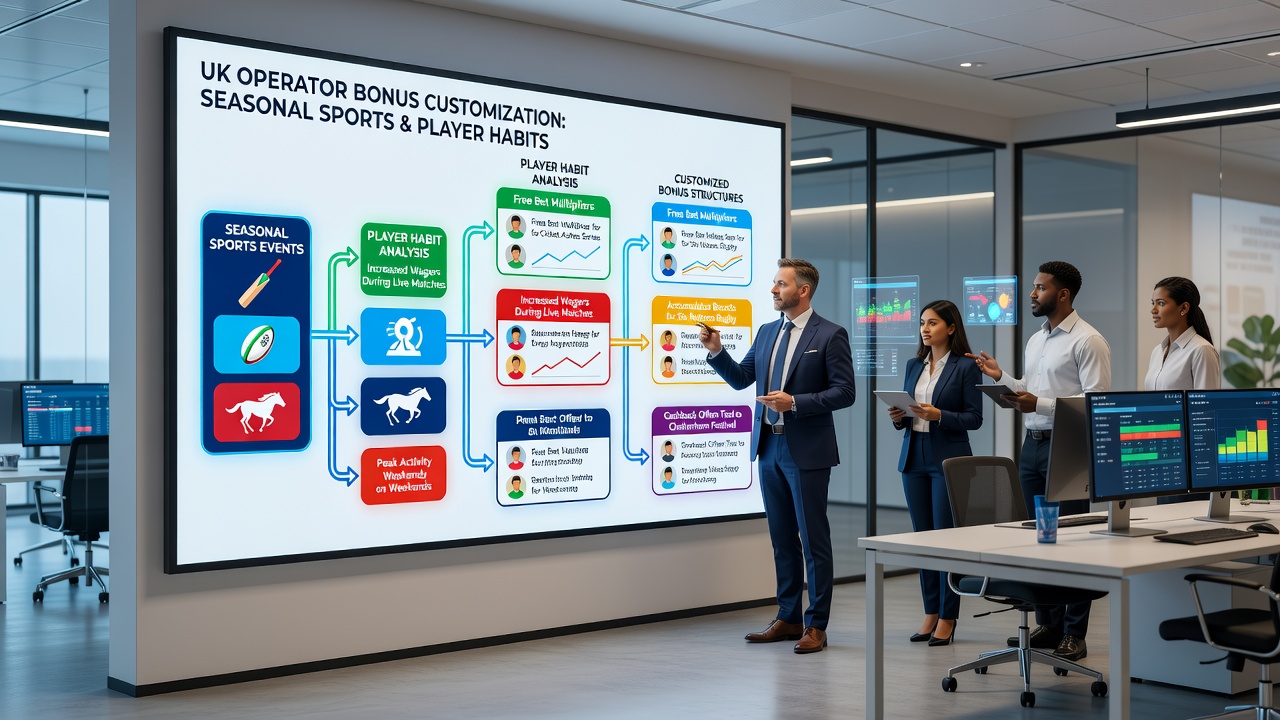
Research from the Australian Gambling Research Centre shows that habit-based segmentation improves retention rates across different jurisdictions, and UK operators apply similar methodologies. They monitor how quickly customers redeem previous bonuses and adjust future offers accordingly, often shortening expiry windows for high-frequency users while extending them for those who bet less often.
Regulatory Influences on Structure Design
Operators must ensure that bonus terms remain clear and that any conditions tied to seasonal events do not obscure the underlying odds or payout calculations. Industry reports from the National Council on Problem Gambling highlight the value of transparent eligibility rules, prompting UK firms to publish examples of how seasonal bonuses interact with different bet types.
During major events, operators sometimes cap the number of times a bonus can be used within a defined period to align with responsible gambling expectations. These limits appear in the terms attached to each promotion and vary according to the sport and the typical stake behaviour recorded for that market.
Examples of Customised Bonus Mechanics
One common approach involves match-day reload bonuses that activate only when a customer has placed a qualifying bet on a live Premier League game, with the bonus amount scaled to the size of that initial wager. Another structure awards loyalty points that convert into free bets exclusively during the Cheltenham Festival period, based on the number of races backed throughout the preceding months.
Operators also test time-limited multipliers on specific bet types, such as offering enhanced returns on correct-score predictions during the opening weeks of the football season. These multipliers appear only to customers whose histories show repeated engagement with that market, thereby concentrating the promotion where uptake is most likely.
Conclusion
UK operators continue to refine bonus structures by combining fixed seasonal calendars with detailed analysis of individual betting patterns, producing offers that appear at relevant moments and reflect documented user behaviour. This approach allows different customer groups to encounter promotions that correspond to their established habits while remaining within the operational and regulatory frameworks that govern the market.